
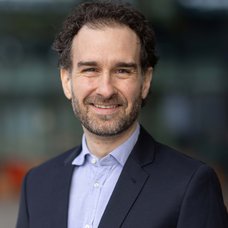
Tommaso Ristori
- Assistant Professor, Cell-Matrix Interactions in Cardiovascular Tissue Regeneration
- Assistant Professor, Modeling in Mechanobiology
Research Profile
Tommaso Ristori is Assistant Professor at the TU/e, in the Biomedical Engineering Department. His research focuses on understanding and controlling blood vessel formation to advance regenerative medicine and tissue engineering. Particular attention is devoted to the mechanobiology and cell-signaling processes that govern sprouting angiogenesis, the formation of new blood vessels from pre-existing ones. Controlling this phenomenon is central both to many medical therapies and to the creation of large, functional tissue-engineered constructs.
Tommaso's current resaerch focusses on: computational modelling of mechanosensitive signaling pathways regulating angiogenesis, with a particular emphasis on angiogenesis after myocardial infarction; and the development of in vitro models of angiogenesis, for the validation and integration of his computational frameworks.
Academic Background
After receiving a joint MSc degree in Mathematics and Mathematical Engineering from the University of Florence (Italy) and the Universidad Complutense de Madrid (Spain), Tommaso Ristori completed a PhD in Biomedical Engineering at the Eindhoven University of Technology (TU/e, the Netherlands), with a thesis focused on the computational analysis of cell-mediated collagen remodeling. His experience at the TU/e then continued as a postdoctoral researcher, in strong collaboration with the Abo Akademi of Turku, Finland. His research then focused on developing computational models of cell-cell signaling mechanosensitivity underlying blood vessel growth and remodeling. Tommaso Ristori then spent two years in the United States, at the Boston University, to perform research on angiogenesis via 2D and 3D cell culture techniques, funded by the NWO Rubicon and the Marie Sklodowska-Curie Fellowships.
In March 2021, Tommaso was appointed Assistant Professor at the TU/e, in the Biomedical Engineering Department. In 2025, he was awarded an ERC Starting Grant to investigate the mechanobiology of cell-signaling pathways regulating angiogenesis and to identify new strategies to leverage this knowledge to achieve cardiac microvascular regeneration after myocardial infarction.