
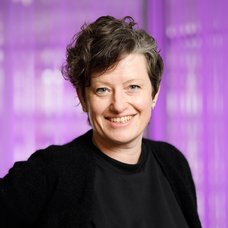
H.K.G. (Kristina) Andersen
dr.
- Associate Professor, EAISI High Tech Systems
- Associate Professor, Industrial Design Research
Research Profile
<p class="p1"><span class="s1">Kristina Andersen is associate professor at the Making with... cluster of the Department of Industrial Design. </span><span class="s2">Her work is concerned with how we can allow each other to imagine our possible futures through digital craftsmanship and collaborations with machines in the context of material practices of soft fiber-based things. </span><span class="s3">How can we innovate, design and act around that which is yet to be imagined? Who gets to drive innovation processes? And how can we reframe our methodologies to include the complex cultural, political, and personal aspects of life? Can we approach this through making (and thinking) about technology, communities and materials as a way to construct the unknown?<br/><br/></span><span class="s3">Andersen is a longstanding advisor to the Stimuleringsfonds Creatieve Industrie, Dutch Design Awards, NWO and EU. Andersen has been paper chair for CHI, and co-chairs the DIS steering committee.</span></p>
Academic Background
<p>Kristina Andersen obtained her PhD from KTH Royal Institute of Technology in Stockholm, her MSc degree in Virtual Environments from University College London, and her Candidature (MA) from the Royal Danish Academy of Fine Art, Industrial Design. She has collaborated widely with national and international research institutes, cultural organizations and industry as researcher, engineer, lecturer and mentor. Andersen was initiator, and PI on the EU-funded project GiantSteps and coordinated and lead the EU funded project TRIP as PI. She has taught widely and ran the combined MA between STEIM and Sonology from 2011-17. </p>
Education and Teaching
<p><strong>Expertise area(‘s):</strong> CA</p>
<p><strong>Squad:</strong> Crafting wearable senses
</p>
<p><strong>Research focus, projects I’d like to coach:<br/></strong>“My main topics are Research through Making, Digital Craftsmanship, and the notion of collaborating with systems and things.”</p>
<p><strong>What is your vision on education/coaching?<br/></strong>“In Crafting Wearable Senses, we are dedicated to supporting students to pursue design and research ideas within the broader scope of research through design, complexity of attention and soft and flexible things. We expect students to be self-directed and focused, and we encourage commitment and excellence. We expect students to define and execute projects that take their origin from the following terms:
</p>
<p>-Making and Crafting, we are committed to making as a method of research and investigation.<br/>-Soft Things, we encourage work that is soft and flexible.<br/>-Machines, we believe that industrial design is anchored in a deep understanding of machines of production. <br/>-Realisation, we encourage students to not only investigate a concept, but to realise it as an engaging interactive system in an embodied manner.<br/>-Sensing, we encourage students to work with sensing technologies.</p>
<p><strong><em>But also:<br/></em></strong>How can we innovate, design and act around that which is yet to be imagined? Who gets to drive such innovation processes? And how can we re-frame our methodologies to include the complex cultural, political, and personal aspects of everyday life?”</p>
Metrics
All time
Scopus
citations
1419
SciVal
citations
1417
PlumX
citations
1436
UN SDGs
In 2015, UN member states agreed to 17 global Sustainable Development Goals (SDGs) to end poverty, protect the planet and ensure prosperity for all. This person’s work contributes to the following SDG(s):