
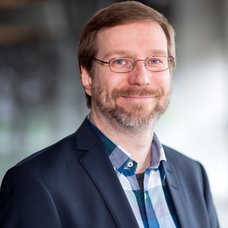
Andreas Spahn
dr.
- Associate Professor, Philosophy & Ethics
- Associate Professor, EIRES Research
<p><span class="TextRun SCXW170683278"><span class="NormalTextRun SCXW170683278">Ethics of technology is not only about avoiding “bad” outcomes. We should also focus on the positive: how to innovate technologies that contribute to the good life and enhance social values?</span></span></p>
Research Profile
<div class="OutlineElement Ltr SCXW261965233">
<p class="Paragraph SCXW261965233"><span class="TextRun SCXW261965233">Andreas </span><span class="TextRun SCXW261965233">Spahn</span><span class="TextRun SCXW261965233"> is an associate professor with the </span><span class="TextRun SCXW261965233">Philosophy& Ethics </span><span class="TextRun SCXW261965233">research </span><span class="TextRun SCXW261965233">group </span><span class="TextRun SCXW261965233">at the department of Industrial Engineering & Innovation Sciences.</span><span class="TextRun SCXW261965233"><span class="NormalTextRun SCXW261965233"> </span></span><span class="TextRun SCXW261965233">His research focusses on ethics of technology, particularly ethics of energy technologies. He has worked and published on ethics of behavior change technologies and persuasive technologies, ethics of energy systems</span><span class="TextRun SCXW261965233">,</span><span class="TextRun SCXW261965233"> and environmental ethics. </span><span class="EOP SCXW261965233"> </span></p>
</div>
<div class="OutlineElement Ltr SCXW261965233">
<p class="Paragraph SCXW261965233"><span class="TextRun SCXW261965233">The transition towards sustainability requires both technological innovations and a change of user behavior. How can we design technologies in a way that they meet our social values, such as sustainability and well-being? How can we persuade users to change their behavior? What are the ethical limits to technological persuasion?</span><span class="EOP SCXW261965233"> </span></p>
</div>
Academic Background
<div class="OutlineElement Ltr SCXW218594159">
<p class="Paragraph SCXW218594159"><span class="TextRun SCXW218594159">Andreas </span><span class="TextRun SCXW218594159">Spahn studied </span><span class="TextRun SCXW218594159">at the University of</span><span class="TextRun SCXW218594159"> Essen (Germany)</span><span class="TextRun SCXW218594159"><span class="NormalTextRun SCXW218594159"> </span></span><span class="TextRun SCXW218594159">and at </span><span class="TextRun SCXW218594159">the University of Notre-Dame (</span><span class="TextRun SCXW218594159">Indiana, </span><span class="TextRun SCXW218594159">USA)</span><span class="TextRun SCXW218594159">. </span><span class="TextRun SCXW218594159">In </span><span class="TextRun SCXW218594159">2007</span><span class="TextRun SCXW218594159">, after </span><span class="TextRun SCXW218594159">obtain</span><span class="TextRun SCXW218594159">ing </span><span class="TextRun SCXW218594159">his doctorate </span><span class="TextRun SCXW218594159">at the Ruhr-Universität-Bochum</span><span class="TextRun SCXW218594159"> (Germany), </span><span class="TextRun SCXW218594159">Dr. </span><span class="TextRun SCXW218594159">Spahn</span><span class="TextRun SCXW218594159"><span class="NormalTextRun SCXW218594159"> </span></span><span class="TextRun SCXW218594159">moved to Eindhoven University of Technology (TU/e, the Netherlands), where he </span><span class="TextRun SCXW218594159">was</span><span class="TextRun SCXW218594159"><span class="NormalTextRun SCXW218594159"> </span></span><span class="TextRun SCXW218594159">appointed as assistant professor with the Philosophy& Ethics research group </span><span class="TextRun SCXW218594159">at the department of Industrial Engineering & Innovation Sciences</span><span class="TextRun SCXW218594159">.</span><span class="TextRun SCXW218594159"> He is the author of many articles and book chapters on ethics of technology, ethics of behavior change and environmental ethics. </span><span class="EOP SCXW218594159"> </span></p>
</div>
<div class="OutlineElement Ltr SCXW218594159">
<p class="Paragraph SCXW218594159"><span class="TextRun SCXW218594159">He has contributed to numerous research projects on persuasive technologies (NWO 2009-2013; NWO 2013-2014), energy technologies (NWO 2011-2015; 2014-current)</span><span class="TextRun SCXW218594159">, and question</span><span class="TextRun SCXW218594159">s</span><span class="TextRun SCXW218594159"> of co-creation in energy technologies (EU Horizon 2020, 2018-current). The Horizon 2020 project </span><span class="TextRun SCXW218594159">SCALINGS </span><span class="TextRun SCXW218594159">investigate</span><span class="TextRun SCXW218594159">s</span><span class="TextRun SCXW218594159"> the role that moral values play in co-creation processes of </span><span class="TextRun SCXW218594159">urban </span><span class="TextRun SCXW218594159">energy technologies. Dr. Spahn was member of the management team of 4TU.Ethics (2014-2017) is currently cha</span><span class="TextRun SCXW218594159">i</span><span class="TextRun SCXW218594159">ring the taskforce sustainability of </span><span class="TextRun SCXW218594159">4TU.Ethics</span><span class="TextRun SCXW218594159">. </span><span class="EOP SCXW218594159"> </span></p>
</div>
Metrics
All time
Scopus
citations
662
SciVal
citations
653
PlumX
citations
675
UN SDGs
In 2015, UN member states agreed to 17 global Sustainable Development Goals (SDGs) to end poverty, protect the planet and ensure prosperity for all. This person’s work contributes to the following SDG(s):